Nuxt 4 Performance Optimization: A Production Guide
A Nuxt 4 application can be server-rendered and still be slow. SSR solves only part of the performance problem: the browser may still receive too much JavaScript, hydrate components the user does not need, download oversized images, wait for slow APIs, or process unnecessarily large Nuxt payloads.
In production, the biggest gains usually come from architecture rather than micro-optimizations: choose the right rendering strategy for each route, minimize client-side work, keep data payloads small, optimize critical resources, cache what can be cached, and measure the result with both lab and real-user data.
This guide is aligned with the current Nuxt 4 documentation, which identifies Nuxt 4.5.2 at the time of writing.
Direct Answer
To optimize Nuxt 4 for production, start with five areas:
- Render each route appropriately — prerender static content and use server rendering or caching for genuinely dynamic pages.
- Ship less JavaScript — lazy-load optional components and delay hydration where interactivity is not immediately required.
- Reduce data overhead — avoid duplicate requests and serialize only data the client actually needs.
- Optimize LCP resources — especially hero images, fonts, CSS and server response time.
- Measure production behavior — use Core Web Vitals, field data and bundle analysis instead of optimizing from intuition.
Nuxt already provides code splitting, SSR, data-fetching utilities and Nitro. The job is to configure those capabilities around the behavior of the application. (nuxt.com)
Performance Targets
Google's current Core Web Vitals thresholds are:
| Metric | Good target | Measures |
|---|---|---|
| LCP | ≤ 2.5 s | Loading performance |
| INP | ≤ 200 ms | Interaction responsiveness |
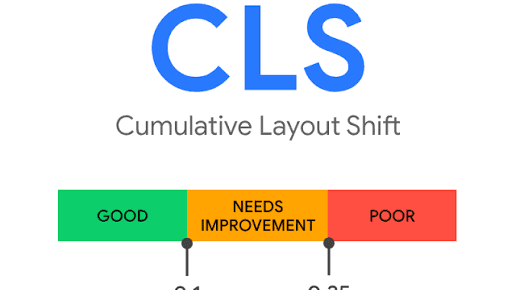
| CLS | ≤ 0.1 | Visual stability |
These targets should be evaluated at the 75th percentile, separately for mobile and desktop traffic. (web.dev)
They are useful targets, not a replacement for diagnosis. A page can have poor LCP because of its server, image discovery, CSS, CDN configuration or several delays combined.
INTERNAL LINK: Core Web Vitals Explained
Choose Rendering Per Route
One of the most important Nuxt performance decisions happens before bundle optimization: does this page need to be rendered dynamically on every request?
Nuxt supports server rendering by default, static prerendering and hybrid behavior through Nitro route rules. (nuxt.com)
For example:
// nuxt.config.ts
export default defineNuxtConfig({
  routeRules: {
    '/': { prerender: true },
    '/about': { prerender: true },
    '/blog/**': { prerender: true },
    '/api/catalog': {
      cache: { maxAge: 60 * 10 }
    }
  }
})
A marketing homepage, documentation page or blog article usually does not need fresh server rendering for every visitor. If its content changes only during deployments or CMS publishing workflows, prerendering removes server rendering from the request path.
Dynamic account pages are different. They may depend on authentication, permissions or frequently changing personalized data and should normally remain dynamic.
The mistake is choosing one rendering mode for the entire application simply because it is easier to configure.
Static Pages Can Go Further
Nuxt 4 also supports noScripts for pages that genuinely require no client-side interactivity. Combined with prerendering, the route can be served as HTML and CSS without the normal Nuxt client scripts and hydration cost. (nuxt.com)
export default defineNuxtConfig({
  routeRules: {
    '/blog/**': {
      prerender: true,
      noScripts: true
    }
  }
})
Do not apply this to interactive pages. A noScripts route has no Vue hydration, client-side event handlers or normal client-side Nuxt navigation.
Reduce Hydration Work
Server rendering produces HTML, but an interactive Nuxt page still needs Vue to hydrate relevant components in the browser.
That work costs CPU time.
A long landing page might contain:
- navigation,
- hero content,
- testimonials,
- pricing calculators,
- carousels,
- newsletter forms,
- maps,
- analytics integrations,
- chat widgets.
They do not all need to become interactive at the same moment.
Nuxt supports delayed hydration strategies for lazy components. A component can hydrate when it becomes visible, when the browser is idle, after interaction, or under another defined condition. (nuxt.com)
<template>
  <HeroSection />

  <LazyTestimonials hydrate-on-visible />

  <LazyNewsletterForm hydrate-on-visible />

  <LazyCookieSettings hydrate-on-idle />
</template>
This is particularly useful for below-the-fold functionality. Do not delay hydration of critical above-the-fold controls simply to reduce a performance score; Nuxt's own documentation warns against delaying hydration of content that users need immediately. (nuxt.com)
Lazy loading and lazy hydration also solve different problems. A Lazy component helps split code, while delayed hydration controls when server-rendered content becomes interactive.
INTERNAL LINK: Nuxt Hydration Explained
Keep Data Payloads Small
Nuxt's useAsyncData and useFetch are SSR-aware. When data is fetched during server rendering, Nuxt can transfer that result through its payload so the browser does not need to repeat the same request during hydration. (nuxt.com)
That is useful, but it introduces another performance question:
How much data are you serializing into the page?
Imagine an API returns 40 fields but the page needs only four.
Instead of transferring the complete object:
const route = useRoute()

const { data: product } = await useAsyncData(
  `product-${route.params.slug}`,
  () => $fetch(`/api/products/${route.params.slug}`),
  {
    pick: ['id', 'name', 'price', 'image'],
    deep: false
  }
)
pick can restrict the result to necessary properties. Nuxt 4's useAsyncData also uses shallow reactivity by default, avoiding the cost of making every nested property deeply reactive when that behavior is unnecessary. (nuxt.com)
For dynamic routes, make cache or async-data keys represent the actual resource. Reusing an ambiguous key across different pages can produce incorrect shared data behavior.
Nuxt also supports payload extraction for prerendered and cached routes. Depending on configuration, payload data can live in _payload.json files and be reused during client navigation. (nuxt.com)
Optimize the LCP Resource
For many production sites, the LCP element is a large hero image or prominent text block.
Google defines good LCP as 2.5 seconds or less at the 75th percentile, but an LCP problem should be decomposed rather than treated as one number. (web.dev)
For a hero image, check:
Server response → HTML discovery → image request → download → render
An otherwise optimized image can still produce poor LCP if the browser discovers it late.
With Nuxt Image, provide appropriate dimensions and responsive sizing, and consider preloading the actual LCP image:
<NuxtImg
  src="/images/hero.webp"
  width="1440"
  height="810"
  sizes="sm:100vw lg:1200px"
  :preload="{ fetchPriority: 'high' }"
  alt="Product dashboard"
/>
Nuxt Image supports image preloading and fetch priority controls. (image.nuxt.com) Web performance guidance also recommends fetchpriority="high" where appropriate for an important LCP image, while warning against indiscriminately prioritizing resources. (web.dev)
Do not lazy-load the image that is expected to become the LCP element.
Control JavaScript Cost
Nuxt automatically performs route-level code splitting, but third-party dependencies can still make individual chunks expensive. (nuxt.com)
Common offenders include:
- editors,
- charting libraries,
- map SDKs,
- animation libraries,
- analytics packages,
- customer-support widgets,
- large utility packages.
A feature that appears only after the user clicks a button should rarely be part of the critical initial bundle.
<script setup lang="ts">
const open = ref(false)
</script>

<template>
  <button @click="open = true">
    Open analytics
  </button>

  <LazyAnalyticsDashboard v-if="open" />
</template>
Nuxt's Lazy component convention uses dynamic imports so optional component code can be loaded later. (nuxt.com)
Plugins deserve the same scrutiny. Nuxt notes that expensive plugin setup can block hydration, and asynchronous plugins that do not depend on each other can use parallel execution. (nuxt.com)
Fix Hydration Mismatches
A hydration warning is not merely cosmetic.
Nuxt documents that mismatches can force Vue to re-render component trees, increase time to interactivity, create visual shifts and break event handling. (nuxt.com)
Common causes include:
- server and client producing different values,
- browser-only APIs used during SSR,
- random values generated separately,
- time-dependent output,
- incorrect client-only rendering.
Fix the underlying state difference rather than hiding the warning.
Measure Before Optimizing
Performance work should follow:
Symptom → measurement → cause → fix → re-measurement
Use PageSpeed Insights or CrUX for real-user Core Web Vitals when sufficient field data exists. CrUX represents actual Chrome user experiences, while Lighthouse provides controlled lab diagnostics. (developer.chrome.com)
For JavaScript, inspect the production bundle:
npx nuxt analyze
Nuxt's analyze command builds the production application and generates bundle analysis that can reveal unexpectedly large dependencies and chunks. The command is currently documented as experimental. (nuxt.com)
A useful production workflow is:
- Check field LCP, INP and CLS.
- Reproduce the slow route under realistic mobile conditions.
- Inspect the network waterfall and performance trace.
- Identify the actual blocking resource or main-thread task.
- Change one meaningful bottleneck.
- Deploy and compare field performance again.
Do not optimize solely for a Lighthouse score.
Common Mistakes
Disabling SSR to make the architecture simpler.ssr: false turns the application into client-side rendering and removes many SSR benefits. Nuxt explicitly notes that static SPA output contains an initially empty app container, whereas SSR prerendering provides page HTML immediately. (nuxt.com)
Hydrating everything immediately. Server-rendered HTML does not mean browser work is free. Delay non-critical interactivity.
Sending entire API objects. Reducing request count while transferring huge serialized payloads only moves the bottleneck.
Lazy-loading the LCP image. Critical content should be discovered early, not intentionally delayed.
Adding every performance experiment. Experimental features can change and may have important trade-offs. For example, Nuxt 4.5 documents experimental SSR streaming, but it changes when response headers and status can be mutated and automatically falls back for several route-rule configurations. Test such features against the actual application before adopting them globally. (nuxt.com)
SeoNest Recommendation
Optimize Nuxt from the outside in.
First measure what users experience. Then determine whether the bottleneck comes from server response time, rendering strategy, critical resource loading, hydration, JavaScript execution or data transfer.
For most production Nuxt sites, the priority should be:
correct rendering strategy → fast critical content → minimal hydration → small payloads → controlled JavaScript → caching → continuous field measurement
A technically sophisticated configuration is not automatically a fast one. The best Nuxt architecture is the one that avoids doing unnecessary work on the server, across the network and in the browser.
FAQ
Is SSR Always Faster?
No. SSR can improve the initial delivery of HTML, but slow server rendering, large payloads and heavy hydration can still produce poor performance. The correct approach depends on the route.
Should Every Page Be Prerendered?
No. Prerender pages whose output can safely be generated ahead of time. Personalized or frequently changing pages may require dynamic rendering.
Does Lazy Loading Improve INP?
It can help when it removes unnecessary JavaScript from the critical path, but INP depends on the actual main-thread work performed around user interactions. Google recommends minimizing event-handler work and breaking up long tasks when necessary. (web.dev)
Should I Use hydrate-never?
Only for content that does not require client-side interaction. Nuxt can server-render such components without paying their normal hydration cost. (nuxt.com)
How Do I Know What to Optimize First?
Start with real-user Core Web Vitals where available. Then use lab tools and browser traces to locate the cause behind the metric rather than guessing from the metric alone.
Final Takeaway
Nuxt 4 already provides a strong performance foundation, but production performance depends on how much work your architecture asks Nuxt and the browser to perform.
Prerender content that does not need request-time rendering. Cache reusable responses. Ship only the data and JavaScript the page needs. Hydrate interactivity when users actually need it. Prioritize the resource responsible for the initial experience, and verify every meaningful change with measurements.
That approach scales better than collecting isolated optimization tricks because it attacks the actual cost of the page.
Sources
- Nuxt — Introduction, Nuxt 4 documentation. Current documentation identifies v4.5.2. Nuxt Introduction
- Nuxt — Prerendering. Nuxt Prerendering
- Nuxt — Server / Hybrid Rendering. Nuxt Server Documentation
- Nuxt — Components: Dynamic Imports and Delayed Hydration. Nuxt Components Documentation
- Nuxt — useAsyncData. Nuxt useAsyncData Documentation
- Nuxt — Nuxt and Hydration. Nuxt Hydration Best Practices
- Nuxt Image — NuxtImg. Nuxt Image NuxtImg Documentation
- Google web.dev — Web Vitals. Web Vitals
- Google web.dev — Philip Walton and Barry Pollard, Optimize Largest Contentful Paint, updated March 31, 2025. Optimize Largest Contentful Paint
- Chrome for Developers — Chrome UX Report API. CrUX API Documentation