JavaScript SEO: A Practical Engineering Guide
JavaScript does not make a website “bad for SEO.” Google has rendered JavaScript for years, and in March 2026 it even removed outdated documentation that implied JavaScript-loaded content was inherently harder for Google Search. The real problem is dependency: if important content, links, metadata, or error states only become correct after fragile client-side code succeeds, search engines have more opportunities to receive the wrong version of the page.
JavaScript SEO is therefore less about avoiding JavaScript and more about engineering pages that remain discoverable, renderable, indexable, and semantically correct.
Direct Answer
JavaScript SEO is the practice of making JavaScript-powered websites understandable and indexable by search engines. For Google, the critical path is crawl → render → index. Your job is to ensure that important URLs can be discovered, the rendered HTML contains the intended content, HTTP responses communicate the correct state, and signals such as canonical URLs, robots directives, titles, links, and structured data remain consistent.
Google Search Central — Understand the JavaScript SEO basics
Key Facts
| Area | What matters |
|---|---|
| Rendering | Google Search uses an evergreen Chromium renderer. |
| Links | Use real <a href="..."> links for crawlable navigation. |
| URLs | Give indexable content stable, unique URLs. |
| Status codes | Real missing pages should not quietly return 200. |
| Metadata | Keep title, canonical and robots directives consistent. |
| Lazy loading | Do not require clicking or scrolling for Google to access important content. |
| Architecture | SSR, static rendering or hybrid rendering usually reduce rendering dependency. |
Google processes JavaScript applications through crawling, rendering and indexing. When Googlebot first fetches a page, it can already extract links from the initial HTML. Pages returning 200 are normally queued for rendering, where Chromium executes JavaScript and Google processes the resulting HTML again. Non-200 responses may not be rendered.
Google Search Central — Understand the JavaScript SEO basics
What Is JavaScript SEO?
Consider a product page built as a single-page application. The server initially returns something like:
<div id="app"></div>
<script src="/app.js"></script>
A normal browser then downloads JavaScript, calls an API and creates the product title, description, links, price and structured data.
That experience may work perfectly for a user. From an SEO perspective, however, the useful page exists only after several additional dependencies succeed: JavaScript must download, execute without a fatal error, reach the API, receive usable data and update the DOM correctly.
JavaScript SEO asks a simple engineering question: what does a crawler actually receive and eventually render?
INTERNAL LINK: How Search Engines Crawl, Render and Index Pages
Rendering Architecture
Rendering strategy matters because it determines how much of the page depends on client-side execution.
| Strategy | Initial response | Practical SEO implication |
|---|---|---|
| Client-side rendering | Mostly app shell + JavaScript | Search-visible content depends heavily on rendering |
| Server-side rendering | Page HTML generated on request | Core content is available immediately |
| Static rendering | HTML generated ahead of time | Strong fit for predictable public content |
| Hybrid rendering | Server/static HTML plus client interactivity | Often a practical balance |
Google explicitly recommends server-side rendering, static rendering or hydration instead of dynamic rendering as a long-term solution. Dynamic rendering—serving bots a specially rendered version while users receive the JavaScript application—is now described as a workaround that adds complexity.
Google Search Central — Dynamic rendering as a workaround
This does not mean every SPA must be rebuilt. A client-rendered application can be indexed. The architectural question is whether SEO-critical content should depend on client execution when it could be available directly in HTML.
Build Crawlable URLs
One of the most common JavaScript SEO mistakes is implementing navigation as behavior instead of links.
Prefer:
<a href="/services/technical-seo">Technical SEO</a>
Avoid relying on patterns such as:
<span onclick="openService()">Technical SEO</span>
Google generally expects crawlable links to use an <a> element with an href. JavaScript may create those links dynamically, but the resulting DOM should still contain valid anchors and resolvable URLs.
Google Search Central — Link best practices for Google
For SPAs, avoid using fragments such as #/products/123 to represent separately indexable content. Google recommends normal URLs together with the History API for client-side routing.
Google Search Central — Fix Search-related JavaScript problems
INTERNAL LINK: Internal Linking for JavaScript Websites
Protect Critical Metadata
JavaScript can change titles, meta descriptions, canonical URLs and robots directives, but doing so increases the number of states you must validate.
Canonical handling deserves particular care. Google can process a canonical inserted by JavaScript, but its JavaScript SEO documentation recommends using HTML where possible. If both the initial HTML and JavaScript provide canonical signals, they should not conflict. Multiple or contradictory canonical elements can produce unexpected results.
Google Search Central — Understand the JavaScript SEO basics
Robots directives are even more sensitive. If the initial HTML contains noindex, Google may skip rendering, so JavaScript that later removes noindex cannot be assumed to rescue the page.
Google Search Central — Understand the JavaScript SEO basics
A useful engineering rule is therefore: SEO-critical metadata should have the correct value as early and deterministically as possible.
Handle Errors Correctly
SPAs frequently return the application shell with HTTP 200 for every URL—including products, articles or profiles that do not exist.
That creates a soft-404 risk.
Suppose /products/deleted-item renders an error message but the server still responds:
HTTP/1.1 200 OK
Google may initially interpret it as a valid page. Google recommends either routing the request to a URL that actually returns 404, or applying noindex to the client-rendered error page when a true HTTP status cannot practically be returned.
Google Search Central — Fix Search-related JavaScript problems
Where possible, fixing the server response is cleaner:
HTTP/1.1 404 Not Found
Content-Type: text/html
Status codes are part of your SEO architecture, not merely backend implementation details.
Watch Lazy Loading
Lazy loading is useful for performance, but important content should not require a user action before it exists.
Google Search does not click buttons or scroll the page to trigger content. Google therefore recommends implementations that load relevant content when it becomes visible in the viewport, such as native browser lazy loading or IntersectionObserver, rather than requiring interaction.
Google Search Central — Fix lazy-loaded content
Infinite scroll needs similar treatment. Each indexable chunk should have a persistent URL and be reachable through normal links; scrolling can enhance the user experience, but it should not be the only discovery mechanism.
Structured Data
Google can process JSON-LD generated by JavaScript when that structured data exists in the rendered DOM. This makes client-generated structured data technically valid. Google nevertheless recommends testing the rendered result with the Rich Results Test. For rapidly changing ecommerce information, its documentation also notes specific reliability concerns around dynamically generated product markup.
Google Search Central — Generate structured data with JavaScript
For predictable page-level schema, generating JSON-LD during server or static rendering usually removes an unnecessary dependency.
Diagnose JavaScript SEO
A useful debugging process compares what the server sends with what Google renders.
| Stage | Question |
|---|---|
| Symptom | Is content, a URL or a rich result missing from Search? |
| Measurement | What does URL Inspection show? |
| Initial HTML | Is the important content already present? |
| Rendered HTML | Does the content appear after Google renders it? |
| Resources | Did JavaScript or API requests fail? |
| Signals | Are canonical, robots and status states correct? |
| Fix | Correct the earliest failing dependency |
| Re-measurement | Test the live URL and rendered HTML again |
Google specifically recommends the URL Inspection Tool and Rich Results Test for examining rendered HTML, loaded resources, JavaScript errors and other rendering information. Client-side analytics alone may not accurately represent Googlebot or Web Rendering Service activity.
Google Search Central — Fix Search-related JavaScript problems
JavaScript and Performance
JavaScript SEO also overlaps with performance. Large amounts of client-side JavaScript require downloading, parsing, compiling and execution on the browser's main thread. That work can delay interactions and hurt INP.
web.dev — Optimize Interaction to Next Paint
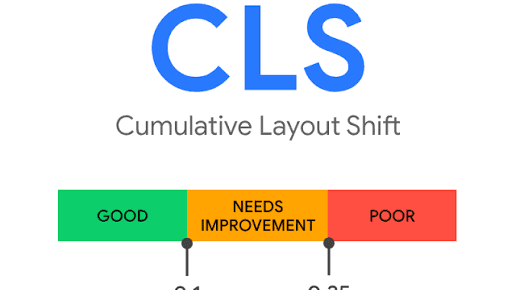
Google documents Core Web Vitals as signals used by its ranking systems, while also warning that good scores do not guarantee high rankings. The current “good” thresholds remain LCP within 2.5 seconds, INP below 200 milliseconds and CLS below 0.1.
Google Search Central — Understanding Core Web Vitals and Google search results
INTERNAL LINK: Web Performance and Core Web Vitals
Common Mistakes
The most damaging JavaScript SEO problems are usually ordinary engineering failures: navigation without real links, content available only after unreliable API calls, incorrect 200 responses for missing entities, conflicting canonicals, initial noindex directives that JavaScript later tries to remove, content hidden behind user interaction, and rendered pages that differ unexpectedly from server HTML.
Another mistake is assuming that “Google renders JavaScript” means rendering no longer needs testing. Google does render JavaScript, but its documentation still describes limitations, rendering queues and cases where rendering may be skipped. Other crawlers may handle JavaScript differently or not execute it at all.
Google Search Central — Understand the JavaScript SEO basics
SeoNest Recommendation
Treat JavaScript SEO as progressive dependency reduction.
Public, search-critical information—primary content, navigation, canonical signals, indexability directives, structured data where practical, and correct HTTP states—should preferably exist without depending on a long client-side execution chain. Use JavaScript for the interactivity that benefits from JavaScript rather than making it responsible for reconstructing every SEO signal.
For modern frameworks, that usually means using SSR, static generation or a hybrid strategy for indexable routes while retaining client-side components where interaction genuinely requires them.
FAQ
Can Google index JavaScript websites?
Yes. Google Search runs JavaScript using an evergreen version of Chromium and indexes content from rendered HTML.
Google Search Central — Understand the JavaScript SEO basics
Is client-side rendering bad for SEO?
Not inherently. The risk comes from making essential content and signals dependent on successful client-side execution. Google itself no longer describes JavaScript-loaded content as inherently harder simply because JavaScript is involved.
Is SSR required for SEO?
No. Google can render client-side applications. SSR or static rendering is an engineering choice that can make critical content available earlier and reduce dependency on rendering. Google also notes that not every bot can execute JavaScript.
Google Search Central — Understand the JavaScript SEO basics
Should JavaScript generate canonical tags?
It can, but HTML is preferable when practical. If JavaScript sets the canonical, avoid conflicting or duplicate canonical signals.
Google Search Central — Understand the JavaScript SEO basics
How do I know what Google actually sees?
Use Search Console's URL Inspection Tool or the Rich Results Test and inspect the rendered HTML, resource loading and JavaScript errors.
Google Search Central — Fix Search-related JavaScript problems
Final Takeaway
JavaScript SEO is not about removing JavaScript. It is about making important search signals resilient.
A technically healthy JavaScript site gives crawlers real URLs, crawlable links, correct HTTP responses, stable metadata and content that survives the rendering process. Once those foundations are reliable, JavaScript can provide rich application behavior without becoming a single point of failure for organic search.
Sources
- Google Search Central — Understand the JavaScript SEO basics, updated March 4, 2026. https://developers.google.com/search/docs/crawling-indexing/javascript/javascript-seo-basics
- Google Search Central — Fix Search-related JavaScript problems, updated December 18, 2025. https://developers.google.com/search/docs/crawling-indexing/javascript/fix-search-javascript
- Google Search Central — Dynamic rendering as a workaround, updated December 10, 2025. https://developers.google.com/search/docs/crawling-indexing/javascript/dynamic-rendering?authuser=683989221&utm_source=chatgpt.com
- Google Search Central — Fix lazy-loaded content, updated December 10, 2025. https://developers.google.com/search/docs/crawling-indexing/javascript/lazy-loading
- Google Search Central — Link best practices for Google. https://developers.google.com/search/docs/crawling-indexing/links-crawlable?authuser=2&utm_source=chatgpt.com
- Google Search Central — Generate structured data with JavaScript, updated December 10, 2025. https://developers.google.com/search/docs/appearance/structured-data/generate-structured-data-with-javascript
- Google Search Central — Understanding Core Web Vitals and Google search results, updated December 10, 2025. https://developers.google.com/search/docs/appearance/core-web-vitals?utm_source=chatgpt.com
- web.dev — Addy Osmani and Jason Miller, Rendering on the Web, updated January 5, 2026. https://web.dev/articles/rendering-on-the-web?authuser=9&utm_source=chatgpt.com